Despite Strong Performance, Whitecaps are Unable to Match Messi, Miami in MLS Cup Final
- therookiereporters
- Dec 12, 2025
- 5 min read

In what was a fast-paced and physical MLS Cup Final, the Lionel Messi-led Inter Miami would outlast a strong performance from the Vancouver Whitecaps to claim their first MLS Cup title on their first time of asking. A 3-1 scoreline helped to push Miami over the edge, with goals coming from the likes of Rodrigo de Paul and up-and-coming star Tadeo Allende.
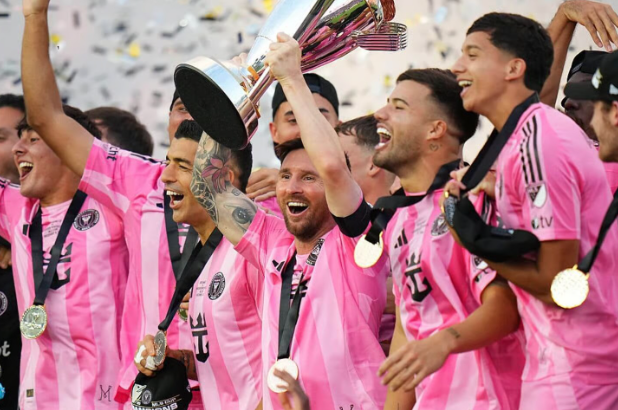
Upon watching the MLS Cup Final, one might give praise to the Vancouver Whitecaps for their formidable performance against an offensively superior Inter Miami team looking to win their first MLS Cup on home soil.
And they would be right to do so. After outlasting an LAFC squad with a strong offence in the Western Conference Semifinal and outpossessing San Diego FC in the Western Conference Final, Vancouver had a path to beat Inter Miami.
They more or less stuck to the plan, but costly mistakes, an own goal, and an inability to convert on the offensive end of the pitch hurt the Whitecaps at the end of the day.
From the opening kickoff, it would actually be the Vancouver Whitecaps who would immediately gain possession and try to establish the forward press that brought them success in the Western Conference Final against San Diego FC.
Miami would be aggressive off the get-go as the Herons’ attack looked to try and force Vancouver into their own end; their first shot would actually come off the counter as a pass to Tadeo Allende would force a shot from the right flank of Miami’s attack. Early fouls would also allow for Inter Miami to alleviate the weight of Vancouver’s possession-based game, forcing the Whitecaps to build up from their own end and earn their first chances from such a tactic.
The first goal of the game would come off of Miami’s transition attack, which was very dangerous in the Eastern Conference Final, as they pounced on a cleared Sebastian Berhalter free kick; a pass to Allende would allow for a run-up the right side and a pass attempt that would deflect off of Whitecaps defender Edier Ocampo and into the back of the Vancouver net.
Vancouver would respond to the goal by attempting to re-establish their possession, but their increased tendency to commit fouls under pressure served as a very bleak reminder of their endeavours in the CONCACAF Champions Cup Final earlier in the year, which saw them get blown out 5-0 by Cruz Azul. However, as the game got more physical, the Whitecaps were able to draw Baltasar Rodriguez and later Maximiliano Falcon into foul trouble, with both being assessed yellow cards.
For much of the remainder of the first half, both Vancouver and Miami would get chances to find another goal; two close-range Lionel Messi free kicks would be defended well by Vancouver, while the Whitecaps earned their chances through their exposing of the left flank of Miami’s defence and through their usage of set pieces from Sebastian Berhalter. Despite Vancouver having the better chances for much of the first half, they would be unable to capitalize on them in an effort to try and level the score.
To start the second half, Vancouver would continue to ramp up the pressure on Inter Miami. The first ten minutes belonged, almost in their entirety, to the Vancouver Whitecaps.
They not only drew Jordi Alba out of Miami’s offensive scheme in its entirety, but they also gave themselves several (unconverted) opportunities going the other way.
A Sebastian Berhalter free kick from a Noah Allen foul on Edier Ocampo? Cleared.
A Berhalter free kick from dangerously close range? Missed over the bar?
A Brian White run-in off a free kick? Cleared.
But at this rate, if you ever need to fall asleep and you don’t like counting sheep, just count Vancouver’s missed chances. You’ll fall asleep quite quickly, perhaps faster than I did after watching this final.
Personal anecdotes and joking aside, Vancouver had so many chances that they actually outpossessed Inter Miami 68%-32% through the first ten minutes of play.
But Miami would get some of that back with their own chances, one of which was a 55th-minute Lionel Messi head that was inches away from being Miami’s second goal. And things would look better for Inter Miami as the substitution of Baltasar Rodriguez for a midfielder in Telasco Segovia would eventually inject a little more pace into Miami’s game.
However, that would only come after Vancouver finally broke through and scored at the hour mark; an Emmanuel Sabbi run would lead to a pass to Brian White and then to Ali Ahmed, who would force a deflection off Miami goalkeeper Rocco Rios Novo for the equalizer.
And for the next eleven minutes, the Whitecaps would continue to push for the lead. Emmanuel Sabbi would see a great chance hit both goalposts and stay out, another Sebastian Berhalter free kick would see Miami pushed deep in their own end, while a Ryan Gauld substitution served to bring the necessary experience for Vancouver to either win the final outright or push it into extra time.
But then Miami completely changed the game. A Tristan Blackmon foul would give Miami some time to alleviate Vancouver’s pressure, and then a turnover forced towards the seventy-first minute would give Messi a wide-open layup of a pass to Rodrigo De Paul, who would score just his second goal of the campaign to give Miami a 2-1 lead.
From there, Vancouver looked deflated. Despite trying to get their equalizer back, Miami would keep responding and they would eventually put the game away on a Tadeo Allende goal in extra time, making the final score of the MLS Cup Final 3-1 in favour of Inter Miami.
While Inter Miami should rightfully celebrate this MLS Cup triumph, the offseason work must begin in earnest; Saturday’s MLS Cup Final represented the final game for Sergio Busquets and Jordi Alba, both of whom were longtime teammates of Lionel Messi’s as well as cornerstones of owner David Beckham’s long-term ambitions for Inter Miami. With both players representing key cogs of Miami’s defence and attack trigger, the Herons will ideally need to either develop or sign replacements before they kick off their 2026 MLS campaign.
But with Inter Miami’s first MLS match in 2026 set for February 21st against LAFC at the Los Angeles Memorial Coliseum, they have time.
For now, Messi and Co. deserve to celebrate.
As for Vancouver, despite looming stadium negotiations and losing what was their third final of the season, the vision for 2026 remains optimistic. Thomas Müller is all but set to have his designated player option activated for the 2026 season, keeping him with the club for the season. With a full season of Thomas Müller’s involvement on the horizon, the Whitecaps should not only be in a prime position to repeat their 2025 performance in 2026, but they could also once again find themselves atop the list of contenders for the CONCACAF Champions Cup and the MLS Cup.
And who knows, maybe even a first triumph in either competition.
Article written by Noah Guttman © Noah Guttman


