From the Pits to the Podium: Everything You Need to Know About CTFROC/CTFROT
- therookiereporters
- Nov 7, 2025
- 4 min read

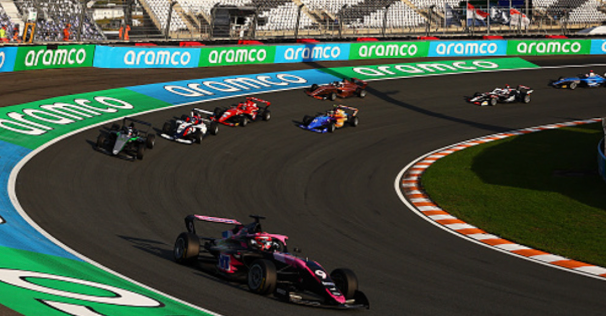
Every great race starts with an understanding of what makes the sport fast, what makes the cars fast and what makes the drivers fast. That’s where CTFROC/CTFROT comes in. This article breaks down everything you need to know about the Castrol Toyota Formula Regional Oceania Championship. From its history and name changes to its teams, drivers, race weekends and iconic New Zealand circuits. CTFROT is the ultimate proving ground for this generation of racing stars.

What is CTFROC/CTFROT?
The current name for CTFROC is ‘Castrol Toyota Formula Regional Oceanic Championship.’ From 2026, however, the competition will race under the name CTFROT, which stands for the ‘Castrol Toyota Formula Regional Oceanic Trophy’. The championship competes from November to March and consists of 6 races through New Zealand. The grid consists of 4-6 teams and 17 drivers, each driver having a unique racing history and bringing something different to the competition.
Series many names
The CTFROT is commonly shortened to ‘Formula Regional Oceania,’ which comes with the abbreviation FRO. CTFROT is part of a series called NextGen NZ. NextGen NZ is the umbrella name for an event that includes a series of championships set to develop the next generation of young racers. These events include the GT World Challenge Australia, Monochrome GT4 Australia, Summerset GT New Zealand, TA2 Championship, NZ Porsche Series, Central Muscle Cars, Toyota GR86 Championship and then of course, CTFROT. NextGen is known for its fan experiences, which include grid access, meet and greets, track walks and pit lane walks. It aims at bringing excitement and attention to young drivers, helping them develop their careers beyond their track performance.
Up until 2023, CTFROT was not an FIA official championship meaning it raced under the Toyota Racing Series. Across all the name changes, it can get quite confusing so in short, we don't use TRS - ended 2023, NextGen NZ - name of the event as a whole, CTFROC - ends in 2025 and finally, FRO - short version of the series name and CTFROT is the long version of it.
Cars, drivers and teams
Many Formula 1 drivers spent time developing in CTFROT such as Liam Lawson, Brendon Hartley, Lando Norris and Yuki Tsunoda. It has also hosted many upcoming drivers such as Arvid Lindblad and Matias Zagazetta, who are currently part of the FIA Formula 2 and Formula 3 championships, respectively. This season, there are 6 teams sharing the grid. These are M2, Giles, Mtec, Kiwi Motorsport and two new teams; Hitech and HMD. Newcomer Hitech is a familiar name in junior motorsports, already having teams in F2, F3, GB3, British F4 and F1 Academy. As of 2026 there will likely be 17-20+ competitors racing throughout the series. In 2025 the CTRFROT trophy went to Red Bull junior driver Arvid Lindblad, with drivers Zack Scoular in 2nd and Nikita Johnson in 3rd. The grid for 2026 will be getting confirmed throughout the November and December period so keep an eye out. Currently, the only confirmed 2026 drivers are Ryan Wood and Freddie Slater.
Where do they race and where to stream
The CTFROT schedule is below:
Round 1: 8-11th January 2026- Hampton Downs Motorsport Park, Waikato
Round 2: 15-18 January 2026- Taupo International Motorsport Park, Taupo
Round 3: 22-25 January 2026- Teretonga Park, Invercargill
Round 4 29 Jan- 1 Feb 2026- Highlands Motorsport Park, Cromwell
Each track is located in New Zealand and their own unique features. Kicking off at round 1, the race is located between Hamilton and Auckland. It is the most northern stop on the calendar. With a 3.8km international circuit, this track is known for its long straights and high speed. With a cafe, go karts, mini golf and premium facilities, Hampton Downs is an ideal track for fans and families to attend. Round 2 is in Taupo, at the Taupo International Motorsport Park. Located in rural Taupo, this FIA grade 3 track hosts Supercars as well as a large list of other racing championships. Famous for its steamy backdrop due to the neighbouring geothermal power station, this track is one of New Zealand's most famous. With go karts and huge spectator capacity, as well as its scenic location, it is a fan favourite for many. Round 3 is held in Teretonga Park International. It is situated 8km west of Invercargill, this 2.57km circuit is New Zealand's oldest track that is still in use. One of the world's most southerly race tracks, Teretonga is known for its unpredictable weather, earning it the nickname 'Terrible Teretonga'. The last round is in the Highland Motorsport Park. It’s located in Cromwell, near Queenstown, this 4.1km track hosts the New Zealand Grand Prix. This is the finale of CTFROT, and is one of the main events in NZ motorsport. The track is famous for its bridge section, where all 4 wheels of these cars typically leave the ground. This modern, world class facility also has go karts, mini golf, a museum, cafe and the famous 'loo with a view' on site.
The championship can be streamed in various ways, enabling access to a large audience. Paid subscriptions which allow you to view the races include Sky Sport Now, Kayo Sports or Fox Sports. It can also be reached free of charge through YouTube streaming by the official Toyota Gazoo Racing NZ YouTube channel, Motorsport.tv and Stuff SpeedHub.
Race weekend structure
So what exactly does a race weekend look like for them? CTFROT has a similar Thursday-Sunday week as most other Formula series with Thursday being full of tests and practice sessions. Instead of having a media day, like in Formula 1, the whole weekend is an opportunity for the drivers to build their media appearances. This includes meet and greets throughout the weekend, track walks everyday and more. Race weekends in CTFROC look like this:
Thursdays host 2 thirty-minute testing sessions and 1 practice session.
Fridays hold 3 thirty-minute practice sessions.
Saturdays are known for the 1 fifteen-minute qualifying session and Race 1, where the grid is set by the previous qualifying session and Race 2, where the grid is determined by reversing the top 8 finishers of the 1st race.
Sundays consist of 1 fifteen-minute qualifying session then followed by Race 3 and Race 4 whose grid is set by the qualifying on that day.
Article Written by Faith Ashington ©️ Faith Ashington 2025