The Rise. The Recognition. The Game. The Story: Ava's Story

Ava is a neurodivergent wheelchair user, a theatre enthusiast and an advocate and above all an athlete.
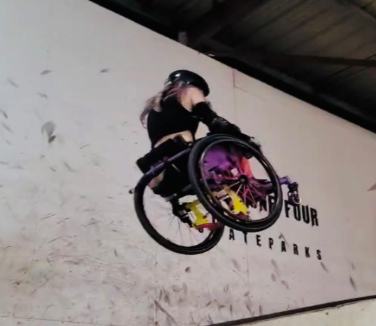
But unlike many athletes Ava does not have one particular sport that defines her; she enjoys trying lots of different sports and discovering what works for her. Her biggest focus is creating opportunities for disabled young people to get involved in a sport, particularly in Bristol.
For Ava, sport has become much more than an exercise or competition. It has become a way of building community, discovering what her body can do, finding happiness and empowerment. Her journey has not always been straightforward though. When Ava was younger swimming played a huge role in her life. She found it beneficial for health and discovered that it was something she could excel at; swimming was a sport she could adapt to a certain degree without it becoming uncomfortable. However Ava says that when she was younger “adaptations were sometimes presented as negative rather than a positive.”
She explains because of this she would sometimes choose sports that did not require as many adaptations, however her understanding has changed. She realised that needing adaptations did not mean she could not participate, it simply meant fun ways to make sports work for her. Swimming became a place where she could burn off energy building a community and enjoy herself.
Then as her disability progressed during her late teens Ava stopped doing sports altogether. That decision was not because she had stopped loving the sport but because there were particular barriers that made it increasingly difficult including financial difficulties in major part but at the same time her disability was progressing in a way that many of her coaches were not trained to understand and eventually Ava had to leave swimming.
Finding Sport Again:
Sport disappeared from Ava‘s life, then around two years ago she had attended a parasports event and while she was there she tried wheelchair basketball. It turned out she could do it and that moment changed everything. “I never wanted to stop doing sports but socially it felt like I couldn’t or shouldn't do it” Ava said.
The problem had not necessarily been her ability, but rather opportunities that were not being reached to her. Parasports was not being advertised to her in a way that made her feel that she could participate. Once Ava actually tried it she discovered just how much she loved it. Wheelchair basketball became the beginning of a new chapter. She started trying lots of different parasports and noticed a pattern and at first even though the happiness she felt came in from the community she was around disabled people who understood her and her experiences but then she realised there was something else.
It was a sport itself after starting wheelchair basketball, experiencing the same relaxing happy feeling she remembered from swimming but that was also excitement and the adrenaline, the thrill. “ I guess I forgot the feeling when I stopped sports but coming back and feeling it just made me feel like I want to keep doing it.”
The realisation of eventually brought Ava back swimming when she got back into the water she immediately realised how much she had missed it, the experience reminded her that sport had always been an important part of who she was. She didn’t go back to swimming as a team. She went back independent and just doing it for herself.
Inspiration Everywhere:
Ava says she never had one person who inspired her to become involved in sport. Instead, she has been inspired by so many disabled people. She said that almost every person she talks to seems to have another sport to recommend to many disabled athletes. She participates in two sports or even more and they encourage her to keep trying new things as a result she ends up trying a huge variety of sports. That is one of the most exciting things about the parasports community. One organisation that has been particularly important for her journey is Access Sport.
Ava has volunteered with the organisation and now is part of its youth panel through this role she helps children get involved in accessible sports. She has also been able to try different sports through the opportunities that Access Sport provides. “It's been a really stable thing in my life helping me find these opportunities.” For someone who spent years feeling that sporting opportunities were not being made available to her, having an organisation that actively helped people find them has made a huge difference.

The Barriers Don’t Disappear:
Although Ava has found her way back into sports, she knows there are still many barriers preventing disabled people from getting involved. One of the biggest problems is that disabled athletes can be spread all over the country meaning that even meeting up with other people can be difficult, getting into events can require a car or relying on public transport can create other challenges, for Ava train travel can be particularly difficult.
There are also existing group chat chats and communities where people share opportunities but she believes they could be created in the future. An app for example could make it easier for disabled people to find accessible sports events and communities in one place. Another major barrier is simply knowing the opportunities, as social media does not always push parasports in the same way it pushes other sports and an opportunity can exist but if people do not know about it they cannot take part. I believe that improving communication and visibility could make a huge difference.
This Is My Body and This Is What I Can Do:
Achievements are not limited to sport and one of the things she is most proud of is producing and performing crip choreographic theatre, the performance told a powerful story that its message was ‘it’s my body and this is what I can do’ rather than presenting disability as something that limits movement.
The performance celebrated the unique movements that disabled people can create. Ava wanted to show that her body can create movements out of bodies. She was proud to put that story on stage and share it to the audience most importantly, she was proud that the story impacted people her love for continues alongside her working sports and disability advocacy working towards become an academic in theatre and wants to explore how they can be made accessible for disabled children for her theatre is another way of creating opportunities for people to express themselves.
Learning To Speak For Yourself:
Ava has also learned how important it is to advocate for herself. She remembers being overlooked as an athlete when she was swimming. She was not the fastest swimmer and she was not progressing in exactly the same way as her able bodied friends, but that did not mean she was not achieving, her body was changing and her disability was progressing. She had to attend doctor’s appointments and sometimes take time away from training at the same time. She was working incredibly hard to adapt to those challenges while continuing to participate in a sport, she loved “I just wanted to get better to be with my team” she remembers.
But rather than recognising everything she was dealing with, she felt that some coaches viewed her as a liability that left her feeling overlooked since getting involved in adaptive sport. She feels less overlooked a major part of that change has come from be becoming more confident in speaking for herself and understanding what she needs.
Recognition Means Being Seen As An Athlete:
For Ava, recognition is incredibly important. Recognition does not simply mean getting a medal. It means being seen as an athlete, she believes disabled athletes often have their stories reduced to their disability when disabled athletes are interviewed.
The conversations can become heavily focused on disability and overcoming barriers. Ava wants to change this and she wants disabled athletes to be asked the same questions as main athletes: What do you love about sport? What motivates you? What are your achievements? Who inspires you? What are the ambitions? Rather than constantly focusing on someone overcoming their disability to participate “there’s nothing about overcoming my disability” she does not see herself as someone who has overcome her disability simply because she participates in sport. She is an athlete who has adapted. There is a difference.

A Different Kind Of Recognition:
Ava believes there are not enough options to recognise disabled athletes outside of the Paralympics. There are not enough competition medals or platforms celebrating disabled athletes throughout the year. It can feel as though the Paralympic is one of the only disabled athletes to receive widespread attention.
She would like to see the Olympics and Paralympic Games being brought closer together. She suggests that instead of separating the two events they could be shown alongside one another for example audiences could watch swimming and then para swimming on the same day the following day or in the same week she believes that the integration would encourage more people to watch parasports and importantly see disabled people as proper athletes. The issue is not about the biggest competition. It is about creating more opportunities for disabled athletes to be seen for the sport.
Representation Matters:
If Ava had the power to change one thing about representation, she would increase the visibility of parasport. She wants more disabled and non-disabled people to see parasports. She wants younger disabled children to see disabled people represented in mainstream media. The more people see disabled athletes, disabled performers and disabled people.
Generally the more it will become normal, Ava wishes that she has seen more disabled people in the media when she was younger she believes representation can help young people understand that they are not alone and that there is a sporting opportunity available to them. It can also change the way non-disabled people understand disability.
Parasports Belongs In School:
Ava believes that one conversation that is not happening enough is education about para sports in school. Schools could introduce children to para sports and different forms of adaptive sports. She believes there could be real value in introducing sports that nobody has tried before because everyone would effectively start from level zero that creates a different environment where nobody has to feel that they are behind. Everyone gets learned offering a variety of sports also makes it easier to find activities that can be adapted for different people. Adaptation should not be something added at the last minute; they should be part of sports from the beginning.
Challenging Misconception:
There are still many misconceptions about to disabled athletes and para sports one is that non disabled people do not understand how para sports work another is that people do not understand parasports classifications and how they work Ava believes education is a major part of breaking these misconceptions down the financial side is another huge issue. Para sports can be expensive but Ava believes that should never mean it is only accessible to people with money.
“Parasports should not just be for rich people, it should be for everyone.” Having more money can make access easier whether that means being able to try to allow more equipment and access opportunities. For Ava, accessibility has to include financial accessibility.
Disability Pride:
For Ava, disability pride is about connection; she believes there is sometimes a misconception about what pride actually means but for her it’s about meeting other people. It’s about raising awareness.
It’s about helping people feel less alone. She also appreciates having a month dedicated to disability pride because it creates an opportunity to be recognised and to think about how society can become more accessible but she believes that awareness should not stop after one more visibility and accessibility should be part of everyday life
The Next Challenge:
Ava ambitions she is working towards a half marathon in her wheelchair and in September she plans to attempt to break a world record for the longest wheelchair wheelie. The current record stands at 12 hours. Her current record stands at six hours. It is an enormous challenge, but a story has never been about staying within what other people think is possible, it has always been about discovering what she can do.
What Does Success Mean?
Despite her ambitions, Ava does not measure success for awards “success does not mean awards to me” for her success is about happiness seeing other people happy is about making a positive impact on herself and other people is about creating a world where people can be themselves where people feel strong, confident empowered that is what success means to Ava.
A Message To Her Younger Self Or Any Young People:
“If I could go back to speak to my younger self before she started trying different sports she would tell her one important piece of advice. Do not always listen to the people who tell you not to do something, disabled people can experience backlash and pushback when trying new things. Sometimes criticism is a disguise as people make assumptions that someone is fragile because of their disability.”
But Ava believes it is important to recognise whether someone’s concern is a general base of safety or whether it comes from stigma and assumptions “if you know you can do it safely and you want to try it out, go for it.” A friend told Ava that if you fall in a wheelchair it is like anybody else falling it is normal. It should not automatically be treated at something alarming, but the important thing is knowing yourself and knowing what you can safely do she wishes she had learnt earlier to recognise when criticism came from genuine concern and when it came from stigma sometimes she says you have to go for something new and she will tell any young people the same thing.

The Athlete Behind The Story:
Outside of sports and advocacy Ava’s interests are a major part of her life. She writes and explores accessibility and in fact wants to help show why theatres can be important for disabled children.
Her personality is just as energetic as her interest; a friend describes her as creative, hyperactive in a refreshing way, funny, hilarious and loyal; her sporting genre reflects those qualities. She’s curious and she keeps trying new things. She asks questions and finds opportunities she wants to bring other people with her.
The Rise The Recognition The Game The Story:
For Ava, The Rise. The Recognition. The Game. The Story. is more than a campaign title.
The Rise represents the rise of sport and the rise of disabled athletes. It is about more people discovering what they can do.
The Recognition means being seen, it means being recognised as an athlete and having sporting achievements celebrated in a wide way. It means being seen as a person who does sport not simply as someone who has overcome disability to sport.
The Game is the sport itself, the adrenaline, the challenge, the feeling of getting back into the water, the feeling of playing wheelchair basketball, the feeling of being part of the game
The Story. Every athlete has a story. Ava believes disabled athletes deserve opportunity to tell their not just a story about their disability not just the barriers they face but the full story the sports they love the people inspiring them their ambitious their personalities and their lives Ava story is one of finding sports again after losing it is a story about discovering that adaptations are not limitations. It is a story about finding community, a story about challenging the idea that disabled people are not fragile. It is a story about creativity, a story about advocacy, a story about wanting better opportunities for young people coming after her and it is a story that is still being written.
Ava does not know exactly where every new sport will take her; she does not know what her next challenge will be but she knows she wants to keep trying. She wants other disabled young people to have opportunity. She wants parasports to be more visible. She wants disabled athletes to be recognised and she wants adaptations to be seen as possibilities rather than problems. She wants people to give them things a go because sometimes the biggest barrier is not whether you can do something, it is whether you are given the chance to find out.
The Rise. The Recognition. The Game. The Story, For Ava is all about creating the chance and making sure disabled people get to write their own stories
Article written by Nailah Gajia


